Sustainable Design Workshop for Students in Macau
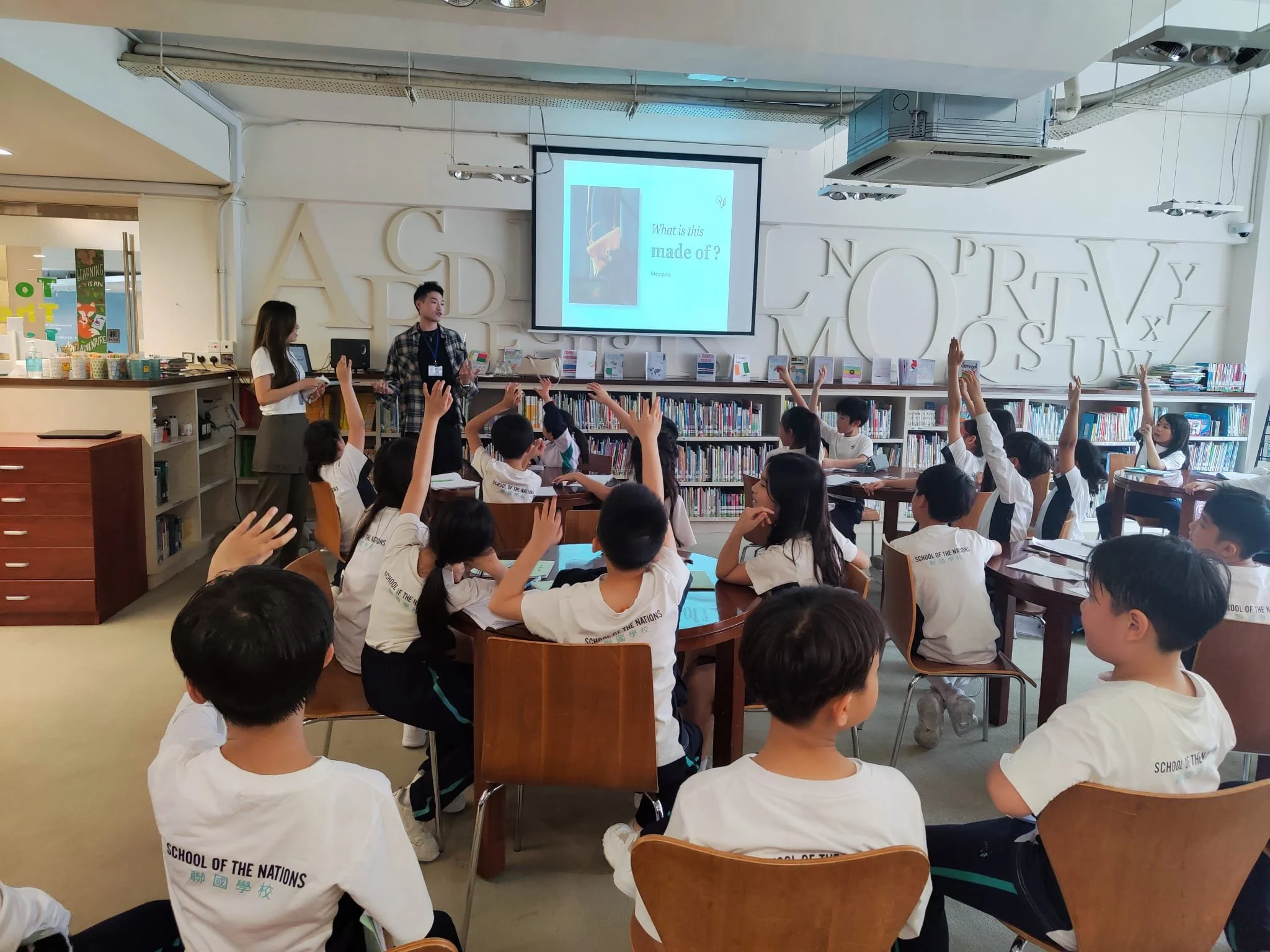
Introducing responsible product design at School of the Nations
As part of O.N.E’s ongoing work in sustainable fashion and material education, I was invited to speak with students at School of the Nations in Macau about sustainable design, vegan materials, and how everyday products are made.
For Hey Xenia, this workshop reflects an important part of my work: making product knowledge easier to understand, especially for young people who are beginning to form their own views on design, consumption, and responsibility.
Sustainability can often feel like a big word. In this session, I wanted to bring it back to something simple and relatable: the products we use every day, the materials behind them, and the choices designers make before an item reaches the customer.
What the workshop covered
The sustainable design workshop introduced students to the relationship between product design, material choices, and responsible fashion.
Instead of presenting sustainability only as an environmental topic, we looked at it through the lens of real product development. A bag, for example, may look simple from the outside, but behind it are many decisions: what material to use, how durable it needs to be, how it feels, how it is produced, and how long it can stay useful in someone’s life.
During the session, we discussed vegan materials, alternatives to animal leather, product development, and why designers need to think beyond appearance when creating something new.
The goal was not to give students a complicated fashion lecture. It was to help them understand that design is connected to everyday choices.
Why sustainable fashion education matters
Sustainable fashion education is not only for designers or industry professionals. It can begin much earlier, when students start asking questions about where products come from and how they are made.
Many young people are already aware of environmental issues, but they may not always see how those issues connect to fashion, accessories, materials, and daily consumption.
A workshop like this creates a more practical entry point. By showing real product examples and material alternatives, students can understand sustainability through something they can see, touch, and relate to.
For me, that is where education becomes meaningful. It turns an abstract topic into a conversation.
Bringing vegan materials into the classroom
One of the key parts of the workshop was introducing vegan materials and more responsible alternatives used in fashion accessories.
Vegan leather is often misunderstood as one single material, but in reality, there are many different types of animal-free materials, each with its own texture, performance, production method, and limitations.
Through this session, I wanted students to understand that material choice is not only about whether something looks good. It also affects durability, function, cost, production, and the overall responsibility of a product.
This is a perspective I often use in my work with founders as well. Good design is not only about the final appearance. It is also about the decisions made before the product exists.
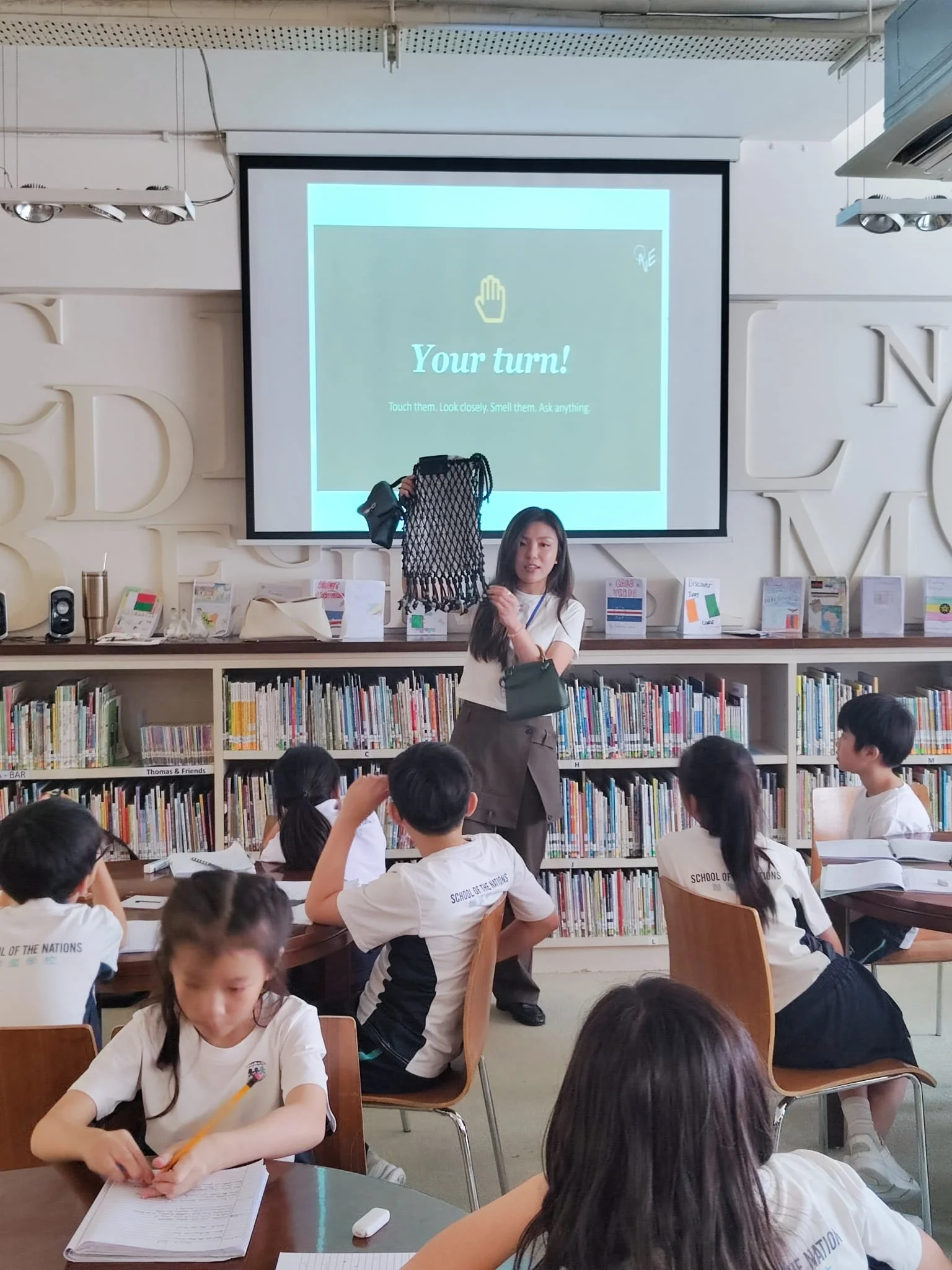
What I learned from the students
The most memorable part of the workshop was the students’ curiosity.
They asked questions about vegan materials, how products are developed, why brands choose certain materials, and how sustainability can be part of design.
Their questions reminded me that young people do not need the topic to be simplified too much. They simply need clear examples, honest explanations, and the chance to connect big ideas with real objects.
It was encouraging to see students think about design not only as something beautiful, but also as something with impact.
Why this project belongs in Work & Stories
This sustainable design workshop is part of the wider story behind Hey Xenia.
My work is not only about helping founders build products. It is also about translating product experience into conversations that are useful, practical, and accessible.
Whether I am working with a new designer, a small brand owner, or a classroom of students, the aim is similar: to make the process of building and understanding products feel clearer and more connected to real life.
This workshop at School of the Nations was a reminder that design education can start with a simple question: what are the products around us made of, and what choices were made along the way?
For me, that question is always worth asking.
